

Soaking Tubs: Comfort and Space Considerations
When people search for types of bathtubs, "soaking tubs" almost always comes up early. That's because soaking is less about a specific visual style and more about the bathing experience a homeowner wants day to day. This article takes a closer look at soaking tubs—how they're commonly used, what people tend to consider for comfort, and how soaking tubs often fit into different bathroom layouts, with or without adding therapy features.
What a Soaking Tub Is
A soaking tub is defined primarily by purpose: a comfortable bathing experience that prioritizes immersion and relaxation. In many projects, "soaking tub" becomes shorthand for a tub that's meant to feel calm and uncomplicated in use.
One important clarification helps reduce confusion: "soaking" describes the experience goal, while terms like "freestanding," "alcove," "drop-in," or "undermount" usually describe how the tub sits in the room. A soaking tub can appear in more than one configuration depending on the bathroom plan and the model.
If you want to browse MTI Baths tubs with soaking-friendly profiles in one place, the soaking tubs selection under the MTI Collection is a helpful place to start.
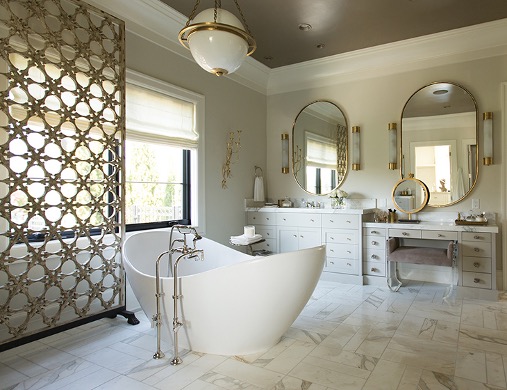
How Soaking Tubs Are Commonly Used
Soaking tubs are typically chosen for a bathing experience that feels simple and comfortable. In real homes, they're often associated with a few common use patterns:
Comfort as the main priority
Soaking tubs are often selected when the tub is expected to be used regularly, not just included because the floor plan has room for one. Comfort considerations tend to be about how the bathing space supports a relaxed soak.
Bathing posture and support
People often react to how the bathing space feels in use—whether the shape supports a relaxed posture and whether the interior feels inviting for a longer soak.
The "feel" of the bathing space
Even without focusing on specifications, soaking tubs are often compared by how open or contained the bathing space feels. Some homeowners prefer a more spacious feel in the bathing well; others prefer a more enveloping, supported feel.
Household preferences
In many projects, the decision becomes clearer when the household's preferences are defined: who expects to use the tub, how often it will be used, and whether the priority is a simple soak or an experience that can be expanded with optional features.
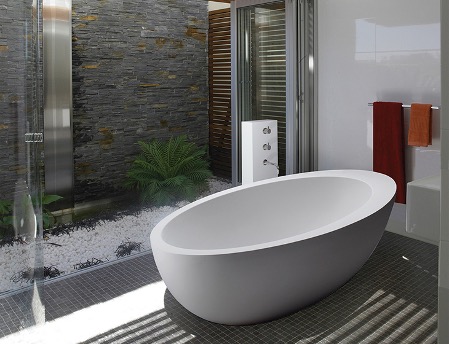
Space Considerations (How Soaking Tubs Fit Into the Room)
Soaking tubs are often selected for experience, but the room plan still influences which models and configurations feel natural in the space.
Bathroom circulation and usable space
Soaking tubs typically work best when the bathing area feels intentional in the room rather than squeezed into leftover space. Bathrooms vary widely in layout, so this usually comes down to how the tub area relates to the rest of the room's walking paths and fixture zones.
Surrounding surfaces and the overall bath zone
In some layouts, the tub sits with open space around it. In others, the tub area includes surrounding surfaces as part of the bath zone (for example, a deck or three-wall enclosure). Both approaches are common, and they influence how "soaking" shows up across configurations.
Common Soaking Configurations (How Soaking Overlaps With Placement)
Because soaking is an experience goal, soaking tubs commonly appear across multiple placement and surround approaches. The points below describe how soaking is commonly discussed within each configuration—without treating them as separate "types" that require a full re-definition.
Freestanding soaking tubs
Freestanding tubs are defined by placement (finished on all sides), and many freestanding models are also soaking tubs in purpose. This is one reason "freestanding vs. soaking" can sound like a comparison, even though they describe different aspects of the tub. For broader browsing, freestanding tubs are typically explored alongside soaking profiles within the MTI Collection.
Built-in soaking tubs (alcove, drop-in, undermount)
Soaking tubs can also be planned as built-in configurations depending on the bathroom layout and the model. In these layouts, the surrounding surfaces help define the bathing zone, while the tub's soaking-friendly profile supports the comfort goal. Built-in approaches are often part of bathrooms where the tub is integrated into a larger wall or deck surface plan.
Soaking in compact or highly defined layouts
In many homes, the layout itself defines how the bathing zone is created.
With or Without Adding Therapy Features
Soaking tubs are often chosen for a simple, classic bathing experience with or without adding therapy features. In other words, the same general soaking goal can be kept straightforward, or it can be expanded depending on the model and the experience preferences.
Exploring MTI Baths Soaking Tubs
For quick browsing across models and collections, these pages are useful starting points:
- bathtubs (browse all tub categories and collections)
- MTI Collection tubs
- Acquabella tubs
Final Takeaway
A soaking tub is defined by the bathing experience it supports. Comfort and space considerations shape how that experience fits into a real bathroom plan, and soaking can overlap with multiple configurations depending on the room and the model. For many homeowners, the clearest next step is simply narrowing the preferred soaking experience first—then reviewing models that match the bathroom layout.